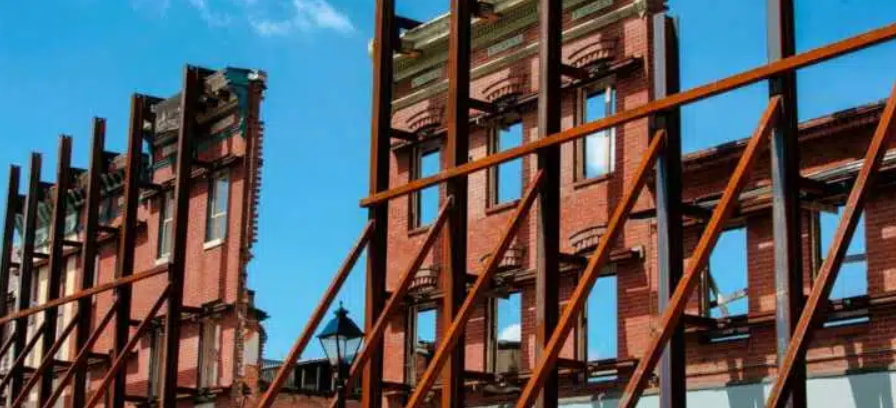
Historic buildings and fire safety: key points in rehabilitation
The rehabilitation of historic buildings in Spain has gained significant relevance in recent years. According to data from the Higher Council of Colleges of Architects of Spain (CSCAE), in 2024, 55,473 homes were approved for major renovation, representing an increase of 47% compared to the previous year and 117% compared to the previous year. 2019. This increase reflects a growing trend towards the conservation and adaptation of architectural heritage.
In this context, ensuring fire safety is a key challenge in the rehabilitation of buildings with historical value. The presence of flammable old materials, obsolete electrical systems, and regulatory restrictions necessitates the implementation of solutions that protect both occupants and the building structure without compromising its heritage value.
What will you learn in this article?
- Structural and risk assessment: the first step in rehabilitation
- What the Technical Building Code establishes
- Opportunities for improvement in fire protection during building rehabilitation historic
- Fire compartmentalization in the rehabilitation of historic buildings
- Other considerations to keep in mind with rehabilitated buildings
Structural and risk assessment: first step in rehabilitation
Before intervening in a historic building, it is essential to carry out a detailed analysis in four key areas:
Building structure
It is essential to evaluate the stability of the building and determine if the structural elements require reinforcement. In some cases, the original materials may have lost load-bearing capacity, making it necessary to use metal reinforcements, fire-resistant laminates, or structural consolidation techniques.
Electrical Installations and Systems
One of the main risks in historic buildings is the presence of outdated electrical installations, which may not comply with current regulations and pose a danger in the event of overloads or short circuits. The age of the wiring and the lack of safety devices increase the likelihood of fires, so updating them is essential in any renovation.
To do this, the type of existing installation must first be identified, assessing the condition of the wiring and the distribution of electrical loads. If the system does not comply with the Low Voltage Electrotechnical Regulations (REBT) or has deteriorated materials and faulty connections, its replacement is mandatory.
Modernization must guarantee safety without affecting the building’s aesthetics. The installation of concealed conduits, the use of fire-resistant conductors, and the incorporation of protective devices, such as residual current devices (RCDs) and overload detectors, allow the electrical network to be adapted without compromising the architectural integrity.
Aesthetic and Regulatory Restrictions
One of the biggest challenges in the rehabilitation of historic buildings isensuring safety without altering their original aesthetics, since, by regulation, some buildings cannot modify certain elements such as facades, woodwork, or decorative details. To achieve this, fire-resistant treatments such as varnishes and lacquers can be applied to the wood, improving its fire resistance without altering its appearance.
Whenever possible, restoration is prioritized over replacement, reinforcing original materials without introducing modern elements that alter the building’s authenticity. Furthermore, the use of fire-rated paints and coatings improves safety without affecting the original finish. The aim is to balance heritage preservation with fire protection, applying reversible solutions compatible with the original structure.
Fire Protection (FP)
The assessment of fire protection (FP) in a historic building is key to determining which elements need reinforcement or replacement to improve fire safety. This involves analyzing the fire resistance of existing materials and the presence of flammable elements that could contribute to the spread of fire.
To ensure structural stability, it is essential to measure the fire resistance rating according to the UNE-EN 13501-2 standard, verifying whether the materials can withstand high temperatures without collapsing. In parallel, the presence of combustible insulation, non-fire-resistant varnishes, or flammable coatings must be identified and replaced, or passive fire protection treatments applied, such as fire-resistant mortars or high thermal resistance panels.
What does the Technical Building Code (CTE) establish?
According to the Technical Building Code (CTE),in Spain, building rehabilitation is understood to be any intervention that significantly affects the structure, safety, or habitability of the property. These interventions may include renovations, extensions, changes of use, structural improvements, or upgrades to installations.
The CTE (Technical Building Code) establishes that renovated buildings must comply with the same safety requirements as newly constructed buildings, which includes aspects of structural safety, habitability, accessibility, and, of course, fire safety.
TheBasic Document SI (Fire Safety) of the CTE (Technical Building Code) establishes that, in renovated buildings, it is mandatory to:
- Adapt the evacuation and compartmentalization conditions of the building to current regulations, if the minimum requirements are not met.
- Reinforce the structures if the original materials do not offer the necessary fire resistance.
- Install appropriate fire detection and suppression systems if the building does not have them or if Existing systems are obsolete.
Opportunities for improving fire protection in the rehabilitation of historic buildings
The rehabilitation of historic buildings represents a key opportunity to improve fire safety. In this process, it is essential to address two aspects: electrical safety and structural reinforcement, which directly affect the building’s resistance, and, on the other hand, the implementation of compartmentalization systems, which allow for the efficient containment of fire spread without altering the building’s aesthetics.
Electrical Safety
Old electrical installations represent a high fire risk. According to El País, almost 80% of homes in Spain have electrical deficiencies, which increases the possibility of failures and overloads. In historic buildings, where many installations have not been updated, this problem is even more critical. To reduce risks, the existing installation should be evaluated.
Reinforcing Structures
Historic buildings may have structures that do not comply with current regulationsdue to aged materials or lack of fire resistance. To improve safety without altering their original design, it is necessary to reinforce ceilings, floors, and walls with discreet solutions.
The use of fireproof coatings, thermal protection mortars, and fire-resistant sheets allows for improved stability and slower fire spread without the need to replace original elements. These solutions increase structural resistance without affecting the building’s aesthetics.
When applying these reinforcements, it is essential to ensure that the materials are compatible with the original construction, guaranteeing a balance between safety, functionality, and heritage preservation.
Fire compartmentalization in the rehabilitation of historic buildings
Fire curtains are the best option for fire compartmentalization in historic buildings, as they guarantee protection without affecting the structure or aesthetics of the building. Their structural impact is minimal, as they require no wall reinforcement or major modifications, making them ideal for buildings with heritage restrictions.
Unlike other systems, their flexibility allows them to adapt to any space, even large openings or irregular corridors, offering effective partitioning without altering the building’s functionality. Furthermore, they comply with UNE-EN 1634-1 and UNE-EN 13501-2 standards, allowing for installation without the need for complex construction or demolition that could compromise the preservation of the building’s heritage.
Another major advantage is their rapid installation and lower cost compared to traditional solutions such as firewalls or large doors, reducing intervention times and facilitating building operation. In addition, their retractable design makes them virtually invisible when not in use, preserving the building’s aesthetics without intrusive elements.
In terms of safety, they offer localized protection in high-risk areas, such as kitchens, warehouses or evacuation corridors, automatically activating in case of fire to contain the spread of fire and smoke. Finally, their durability and low maintenance make them an efficient long-term solution, ensuring reliable performance without major periodic interventions.
Other considerations to keep in mind with renovated buildings
In addition to fire protection, the renovation of a historic building must guarantee compliance with the requirements established in the Spanish Building Technical Code (CTE) in terms of structural safety, habitability, and accessibility.
From a Structurally, it is essential that the building complies with current regulations, ensuring the stability of the structural elements and reinforcing those that could compromise their integrity without affecting its heritage value.
Regarding habitability, the renovation must include improvements to ventilation and air conditioning, optimizing thermal and comfort conditions within the building without altering its original design. Implementing efficient solutions in terms of insulation and air renewal contributes to the preservation of the building and the well-being of its occupants.
On the other hand, accessibility is a key factor in any renovation, ensuring the building’s adaptation to regulations that facilitate its use by people with reduced mobility. The installation of ramps, elevators, or safety railings must be integrated while respecting the building’s aesthetics and ensuring its functionality without compromising its original structure.
Considering these aspects not only allows the building to comply with current legislation but also improves its efficiency and functionality, ensuring that its use is safe, comfortable, and accessible for everyone.
If you have a project of this nature and would like to learn more about compartmentalization solutions, please do not hesitate to contact us.
Bibliography
Spanish Council of Architects. (2024, December 28). 2024 shows the best figures for the construction sector in Spain since 2019. CSCAE. https://www.cscae.com/index.php/conoce-cscae/sala-de-comunicacion/8935-el-ano-2024-arroja-los-mejores-datos-del-sector-de-la-edificacion-en-espana-desde-2019
Martín, I. (2025, January 25). Electrical obsolescence in homes slows down the energy transition. El País. https://elpais.com/economia/negocios/2025-01-25/la-obsolescencia-electrica-de-las-viviendas-frena-la-transicion-energetica.html
Ministry of Transport, Mobility and Urban Agenda. (n.d.). Fire Safety (SI). Technical Building Code. https://www.codigotecnico.org/DocumentosCTE/SeguridadEnCasoDeIncendio.html